Browse Items (36 total)

  • Collection: Molly Ockett Exhibit images

"Great Dying"
Still Image / Available Online

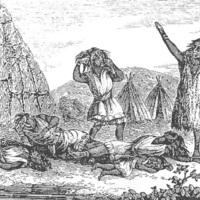
King Philip's War (1675-1676), a brief but bloody conflict between Native Americans and English colonists in southern New England, marked a turning point in 17th century encounters between Indians and Europeans. However, it was not the worst…

"Molly Ockett's Cave"

Still Image / Available Online

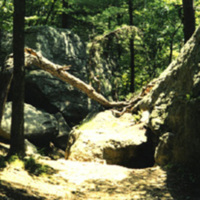
Among the many geographic locations in this region associated with Molly Ockett that can be visited today is "Molly Ockett's Cave" in Fryeburg. Located at the base of a rocky outcrop known as Jockey Cap, this stone shelter is situated a short…

1613 Saco, Maine map

Still Image / Available Online

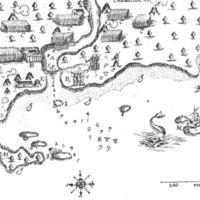
Like other Native Americans inhabiting northern New England, the Pigwackets were a semi-nomadic people, moving easily up and down river in light birchbark canoes in pursuit of sustenance. This 1613 map of Saco, Maine, by Samuel de Champlain includes…

1795 Carleton map

Still Image / Available Online

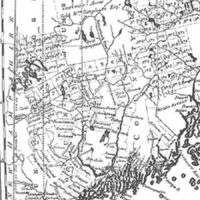
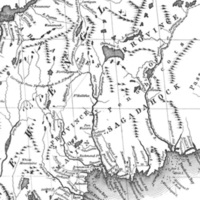
Abenaki survival in post-Revolutionary Maine (delineated here in a 1795 map by Osgood Carleton), as well as other parts of northern New England, depended on accommodation to the white man's world. Often camping near the newly laid out communities…

1989 Mollyockett Day program

Still Image / Available Online

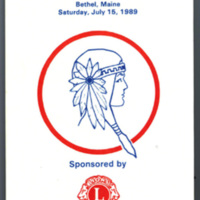
A modern consequence of Molly Ockett's longstanding fame has been the use of her name in connection with several area businesses, institutions, and events. Other Abenaki of Molly Ockett's time, including Metallak and Sabattis, have had their names…

Andover view

Still Image / Available Online

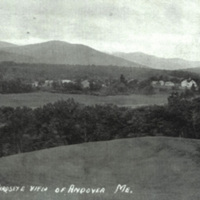
According to an 1861 letter written by Silvanus Poor of Andover, Maine, to Dr. Nathaniel T. True of Bethel, Molly Ockett was living at the forks of the Ellis River in Andover with "old Phillip's (an Indian) family," when Ezekiel Merrill, that town's…

Bag of Corn

Still Image / Available Online

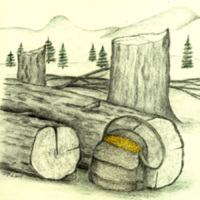
Molly Ockett's generous nature is well documented by Henry Tufts, who met her in the 1770s. In his autobiography, published in 1807, Tufts records an instance of her generosity to a white man from Pigwacket (Fryeburg), who found himself without food…

Bloodroot

Still Image / Available Online

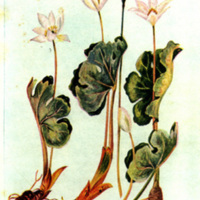
Molly Ockett's intimate understanding of the natural environment and her use of herbal remedies to cure many of the afflictions of both Indians and white settlers earned her the respect and gratitude of those around her. Henry Tufts called her "the…

Dr. Moses Mason House, circa 1905

Still Image / Available Online

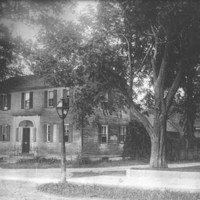
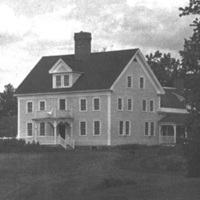
During the last few years of her life, Molly Ockett was an occasional visitor to the Bethel home of Dr. Moses Mason and his wife, Agnes M. Straw. Their Federal style house, begun in 1813, is shown here in a circa 1905 photograph. The Mason House is…

Dr. Nathaniel Tuckerman True

Still Image / Available Online

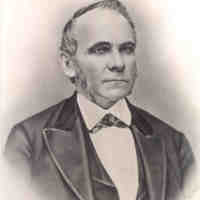
For many years headmaster at Gould Academy in Bethel, Dr. Nathaniel T. True (1812-1887) was an antiquarian, newspaper editor, and amateur scientist keenly interested in the language and customs of the Abenaki. Dr. True contributed numerous articles…

Early view of Boston

Still Image / Available Online

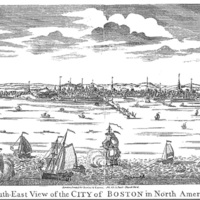
Around 1800-1805, Molly Ockett is said to have resided for a year in Boston with the family of a Colonel Clark, whose life she reportedly had saved in 1781. Though she probably had visited the city in her youth, Molly Ockett yearned for the North…

Fryeburg 1880 map

Still Image / Available Online

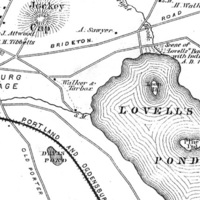
The village of Pigwacket was the scene of one of the most widely known military events in colonial New England history when, on May 8, 1725, thirty-four English scalp hunters led by the daring Captain John Lovewell engaged some forty Abenaki led by…

Hannibal Hamlin

Still Image / Available Online

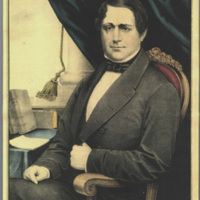
The most famous story connected with Molly Ockett's healing powers has to do with her cure of the infant Hannibal Hamlin, who was born at Paris Hill, Maine, on August 27, 1809, and who later became Lincoln's first vice-president. During the winter…

Hanover intervale

Still Image / Available Online

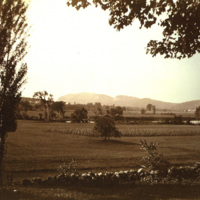
The first white settlers to venture into this region discovered something the Abenaki had known for generations: the level "intervales" alongside the Androscoggin and other rivers contained amazingly fertile soils that were ideal for raising a…

Henry Tufts book

Still Image / Available Online

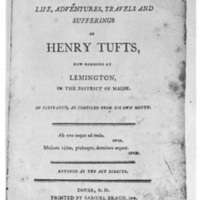
One of the earliest and most detailed accounts of Molly Ockett's life comes from a book about Henry Tufts (1748-1831), a shady character who lived among the Abenaki of western Maine between the spring of 1772 and the spring of 1775, a three-year…

Indian Fort

Still Image / Available Online

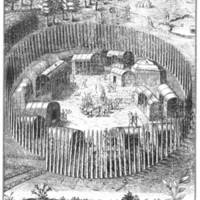
A major focal point of Molly Ockett's world was Pigwacket, the ancient Indian enclave at present-day Fryeburg, Maine. This late 16th century representation of an East Coast Algonquian village conveys something of Pigwacket's appearance in the…

Indian Raid 1931

Still Image / Available Online

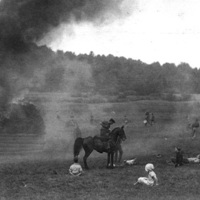
In August 1931, the people of Bethel celebrated the 150th anniversary of New England's Last Indian Raid with a parade, speeches, a special edition of the local paper, and a "pageant" meant to recreate that long-ago skirmish. The grand climax of this…

Indian Raid map

Still Image / Available Online

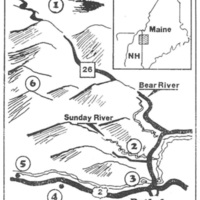
This map pinpoints sites connected with New England's Last Indian Raid of August 2-3, 1781: (1) Indians venture south from Umbagog Lake; (2) Barker homestead on Sunday River attacked; (3) Captives taken at Clark house in Bethel; (4) Gilead settler…

Indian teepee

Still Image / Available Online

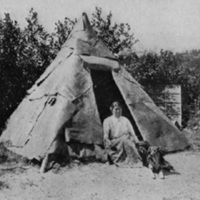
Despite her familiarity with the ways of the white settlers, Molly Ockett practiced an Indian style of living during her travels throughout the area, including trips to northern Vermont, New Hampshire, and Canada. Stopping at favorite campsites and…

Lovewell monument

Still Image / Available Online

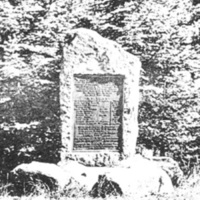
A monument commemorating the "Battle of Lovewell's Pond" was erected at Fryeburg in 1904 by the Society of Colonial Wars. The monument's plaque states, "To mark the field of Lovewell's Fight on the 8th day of May 1725 between a company of…

Merrill House

Still Image / Available Online

In July of 1790, Molly Ockett served as midwife at the delivery of Susan Merrill, the first white child born in Andover, Maine. The child's parents, Ezekiel and Sarah Merrill, settled in Andover in 1789 and constructed a small log shelter on the…

Mitchell map

Still Image / Available Online

In this detail from John Mitchell's 1755 Map of the British and French Dominions in North America, we have an intimate view of Molly Ockett's world at the outbreak of the so-called French and Indian War (1755-59), when many Abenaki found safe haven…

Molly Ockett birchbark box

Physical Object / Available Online

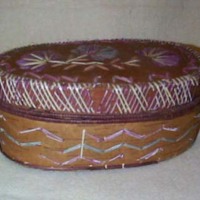
This small birchbark box with cover, decorated with dyed porcupine quills, was made by Molly Ockett for the family of Israel Kimball (1769-1829) of Middle Intervale (Bethel) and is now in the collection of the Bethel Historical Society; a larger box…

Molly Ockett gravestone

Still Image / Available Online

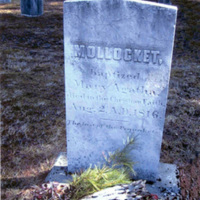
In 1867, the women of the Congregational Church at Andover, Maine, raised money to erect a gravestone over Molly Ockett's last resting place in that town's Woodlawn Cemetery. Inscribed to the memory of the "last of the Pequakets," the marble tablet…

Molly Ockett in Canoe

Still Image / Available Online

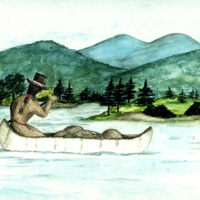
One of Molly Ockett's outstanding traits was her ability to move easily in and out of the white communities. In her lifetime, she saw her native world devastated—her people killed, their land taken, and their resources depleted or destroyed—and yet…